
Pirate Code & Articles of Agreement — The Code of Pirates
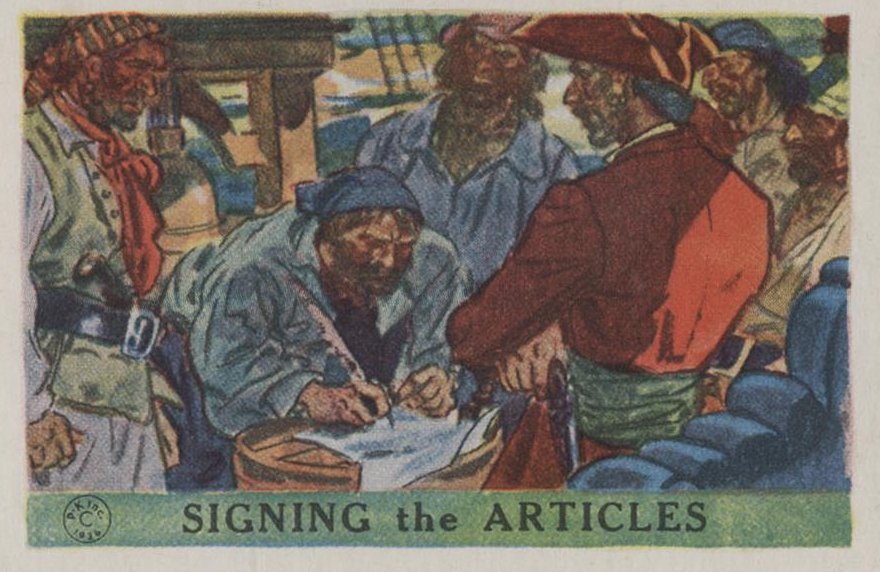
Pac-Kups Jolly Roger Pirates trading card, 1936.
Public domain.
The pirate code of the Golden Age of Piracy grew out of hard experience. Most pirates had previously served in naval or merchant vessels under harsh conditions and harsher commanders, and they carried the desire for something more equitable aboard their own ships. The result was one of history’s most remarkable social experiments: a written code of conduct that governed everything from the division of plunder to compensation for injuries — signed by every crew member before they ever left port.
The Pirate Code of Conduct: From Chasse-Partie to Articles of Agreement
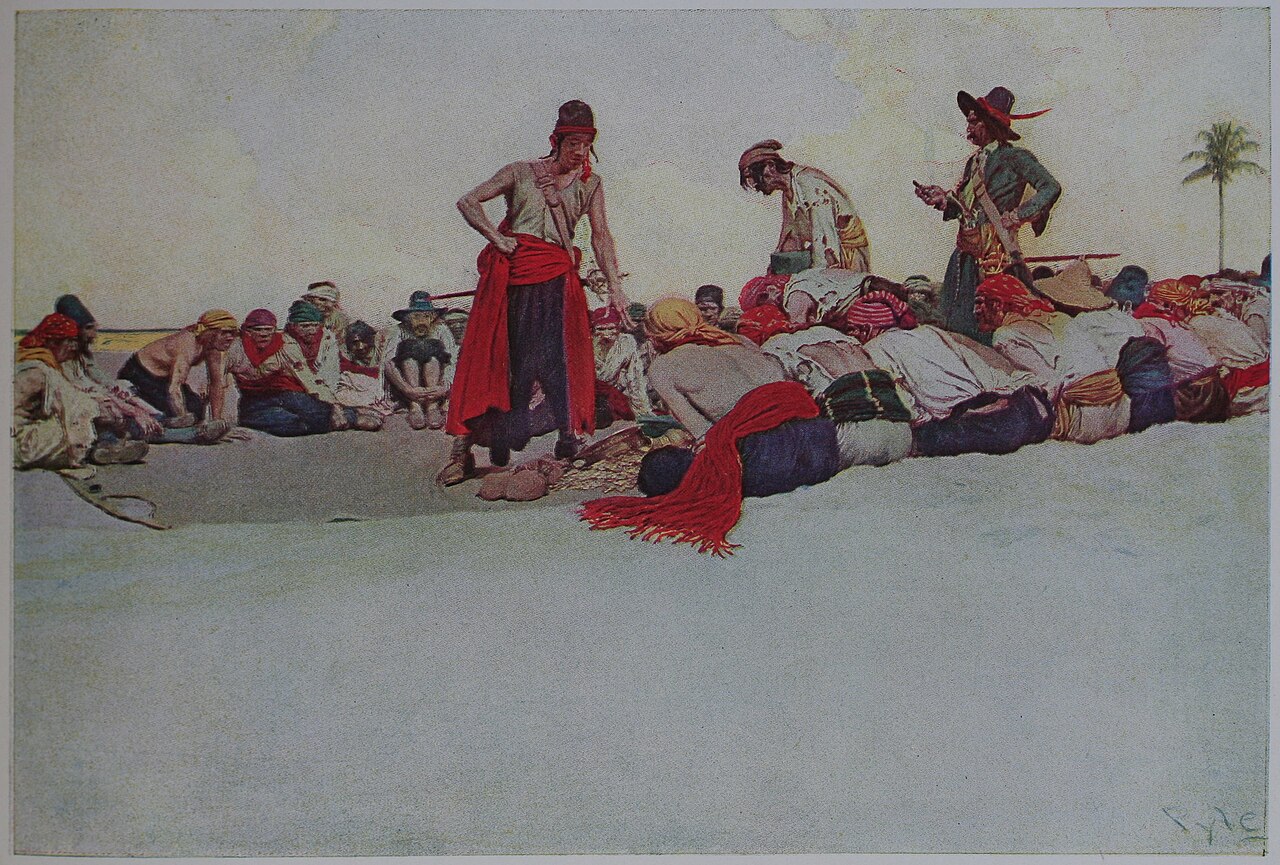
Howard Pyle, 1905. Public domain.
Delaware Art Museum.
Out of their distrust of dictatorial rule, pirates of the Golden Age placed a large portion of the captain's traditional power into the hands of an elected pirate quartermaster — second-in-command and almost a co-captain, representing the best interests of the pirate crew. It was the quartermaster who guarded and divided the plunder after each successful raid, ensuring every man received his rightful share according to the articles he had signed. In a world where cheating a crewmate could mean marooning or worse, this role was the living embodiment of the pirate code — the guarantee that the social contract meant something.
In the second half of the 17th century, Caribbean buccaneers began operating under a set of rules called the Chasse-Partie (or Charter Party), which at one point even held legal weight in the Jamaican court system. This early pirate code of conduct evolved into the Articles of Agreement — the formal document that laid out the standard operating procedures for a pirate crew. To “go on the account” meant that a person had signed the articles and was declaring themselves a member of the crew.
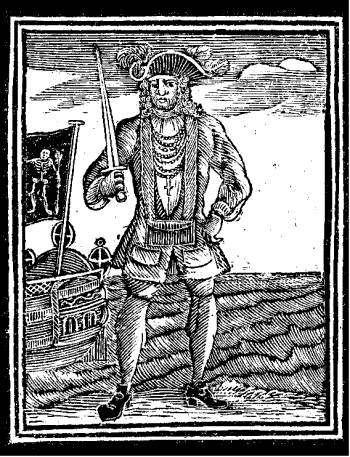
Period portrait. Public domain.
The most celebrated pirate articles of agreement in the Golden Age belonged to Bartholomew Roberts — Black Bart — the most successful pirate in history by ships captured. His code was remarkably detailed: it set lights-out at 8pm, protected musicians' right to rest on Sundays, defined shares for each rank, and prescribed specific punishments for specific offenses. It was less a criminal charter than a constitution, and it governed one of the most disciplined pirate fleets of the era. Roberts himself was a teetotaler in an age of hard-drinking sailors — a man of strong personal convictions who imposed order not through brutality but through a written law that every man had agreed to follow. That such a code could hold together a crew of hardened pirates across three oceans and over 400 captured ships says everything about the power of the pirate articles when taken seriously.
Elements of the Pirate Articles of Agreement
- who was voted CAPTAIN — if the ship’s owner was not among them to take charge
- which AREA to sail in search of fortune
- the TERMS and conditions of service, clearly stated
- the DIVISION of plunder among crew members.
A pirate captain and possibly the quartermaster might receive as much as two — sometimes up to five — shares of the loot, while the master gunner, boatswain, and carpenter might receive 1¾ shares. All others received 1 share or less. - INTOLERABLE behaviors — fighting, gambling, open flame below decks
- PUNISHMENTS for broken rules
- COMPENSATION for disabling injuries: loss of eye, hand, arm, or leg (losses of the right hand or arm were compensated more, as most pirates were right-handed)
📖 The Pirates' Code: Laws and Life Aboard Ship — the most focused single volume on what the pirate articles actually said and how they governed daily life at sea. If the elements above left you wanting more detail, this is the next read. The Pirates' Code on Amazon → (Amazon affiliate link)

Each pirate would sign the articles — or make his mark if illiterate — and then swear a pirate oath with his hand on either a Bible, crossed pistols, a human skull, or while seated on a cannon.
Pirate Punishments for Breaking the Code
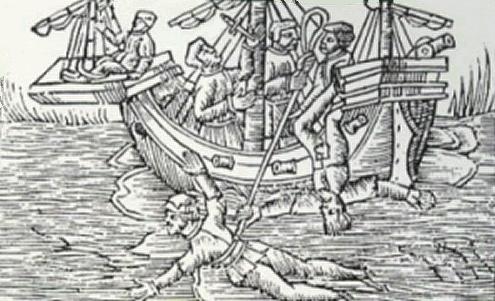
Tudor woodcut, 1485–1603. Public domain.
Bournville Village Trust, Birmingham.
Punishments for breaking the pirate code were swift and rarely made exceptions — an attitude carried over from naval service. The quartermaster delivered whatever punishment the captain or a crew vote had determined: legs in irons, flogging, or keel-hauling. Keel-hauling meant being dragged by rope beneath the hull from one side of the ship to the other — barnacles shredding the skin, drowning a constant possibility, and survival far from guaranteed. More serious crimes — theft, cowardice, desertion — were answered with marooning or death. Marooning was particularly feared: a pirate left on a remote island with a pistol, a small amount of powder and shot, and a bottle of water had few options. The pistol was not for defense — it was understood to be for the moment when thirst and despair made the alternative preferable.
Captain John Phillips’ Pirate Articles — The Revenge, 1723
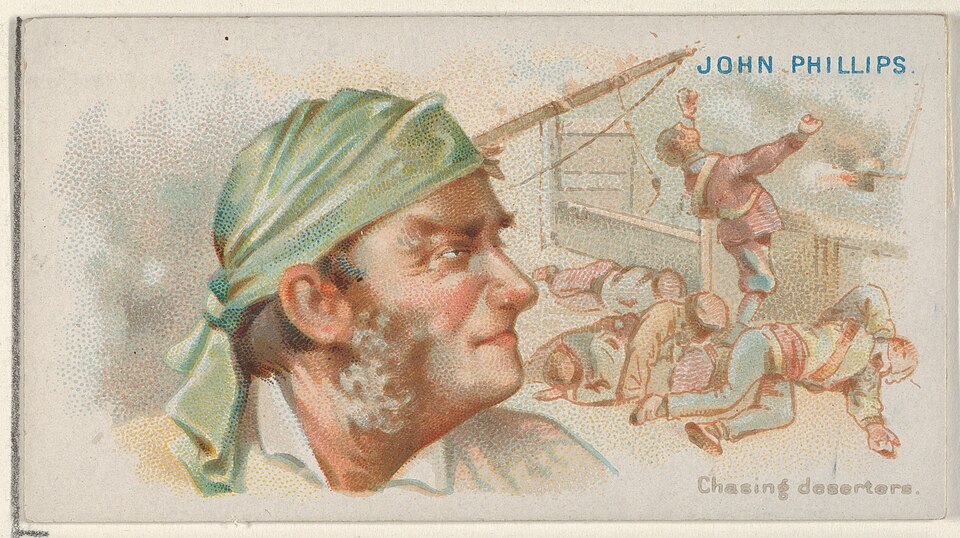
Allen & Ginter, c.1888. Public domain (CC0).
Metropolitan Museum of Art.
These are the nine articles used by Captain John Phillips aboard his ship Revenge — one of the best-preserved examples of a real pirate code of conduct from the Golden Age of Piracy:
- Article One: Every man shall obey civil command; the captain shall have one full share and a half in all prizes. The Master, Carpenter, Boatswain, and Gunner shall have one share and a quarter.
- Article Two: If any man shall offer to run away, or keep any secret from the Company, he shall be marroon’d with one bottle of powder, one bottle of Water, one small Arm, and shot.
- Article Three: If any Man shall steal any Thing in the Company, or game, to the value of a piece of Eight, he shall be Marroon’d or shot.
- Article Four: If at any Time we should meet another Marooner (that is, Pyrate) that man shall sign his Articles without Consent of our Company, shall suffer such Punishment as the Captain and Company shall think fit.
- Article Five: That man that shall strike another, whilst these Articles are in force, shall receive Moses’s Law (that is 40 Stripes lacking one) on the bare Back.
- Article Six: That Man that shall snap his Arms, or smoak Tobacco in the Hold, without cap to his Pipe, or carry a candle lighted without lanthorn, shall suffer the same Punishment as in the former Article.
- Article Seven: That Man that shall not keep his Arms clean, fit for an Engagement, or neglect his Business, shall be cut off from his Share, and suffer such other Punishment as the Captain and Company shall think fit.
- Article Eight: If any man shall lose a joint in time of Engagement, shall have 400 Pieces of Eight; if a limb, 800.
- Article Nine: If at any time you meet with a prudent Woman, that Man that offers to meddle with her, without her Consent, shall suffer Death.
The Pirate Code and the Origins of Pirate Democracy
📖 Honor Among Thieves — Jan Rogozinski's account of Captain Kidd, Henry Every, and pirate democracy in the Indian Ocean — the best single account of how the pirate code operated at the furthest reaches of the Golden Age. Honor Among Thieves on Amazon → (Amazon affiliate link)
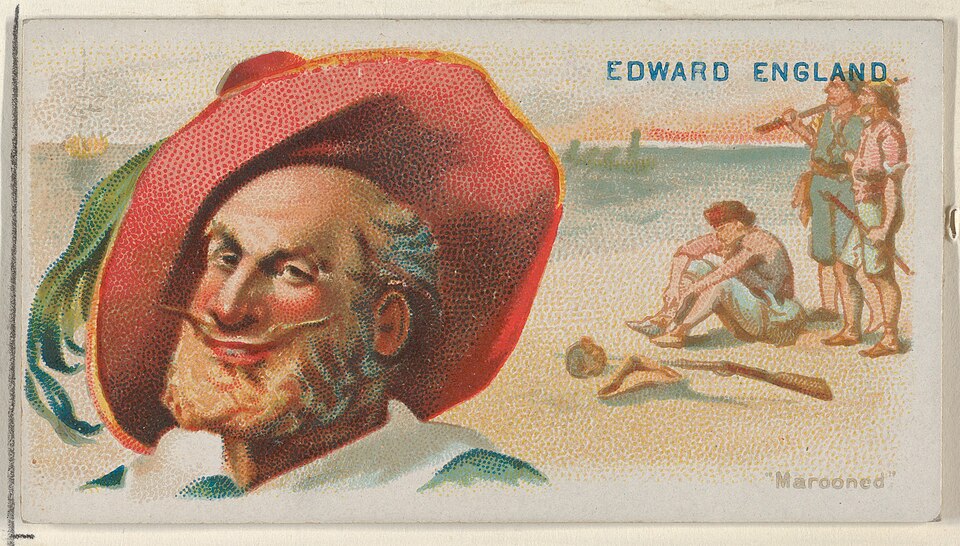
Allen & Ginter, c.1888. Public domain (CC0).
Metropolitan Museum of Art.
In the years before the founding of democratic nations, pirates were men in open rebellion against the harshest institutions of their era. The pirate code helped them govern themselves under a genuine social contract — one signed by everyone and enforced by everyone. The elements embedded in the code of pirates — equality, decisions by group vote, defined punishments, division of power between captain and quartermaster — were the building blocks of pirate democracy, and they contributed to the framework upon which later democratic institutions would be built. That a band of outlaws in the Golden Age of Piracy was practicing proto-democracy a generation before the American Revolution is, as the page once noted, a pretty punch indeed.
From The Pirates' Realm Shop
🗺️ The Golden Age of Piracy Timeline — a two-page printable covering 25 key events, 14 pirate biographies, famous ships, the pirate code, and a full glossary. Instant PDF download, letter size, $5.00.
Get it on Etsy → Instant download — no shippingAs both an Amazon and eBay Associate I earn from qualifying purchases.
All content ©2003– The Pirate's Realm unless otherwise noted. All rights reserved. Privacy Policy